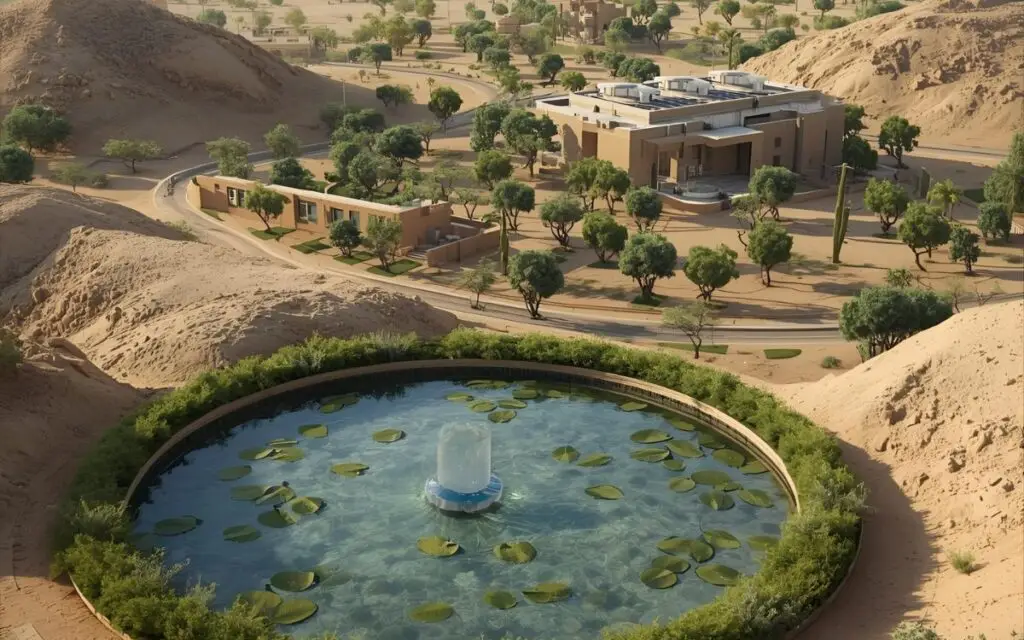
Sustainable Water Systems at Solaria Eco-Resort
Water: From Air to Oasis
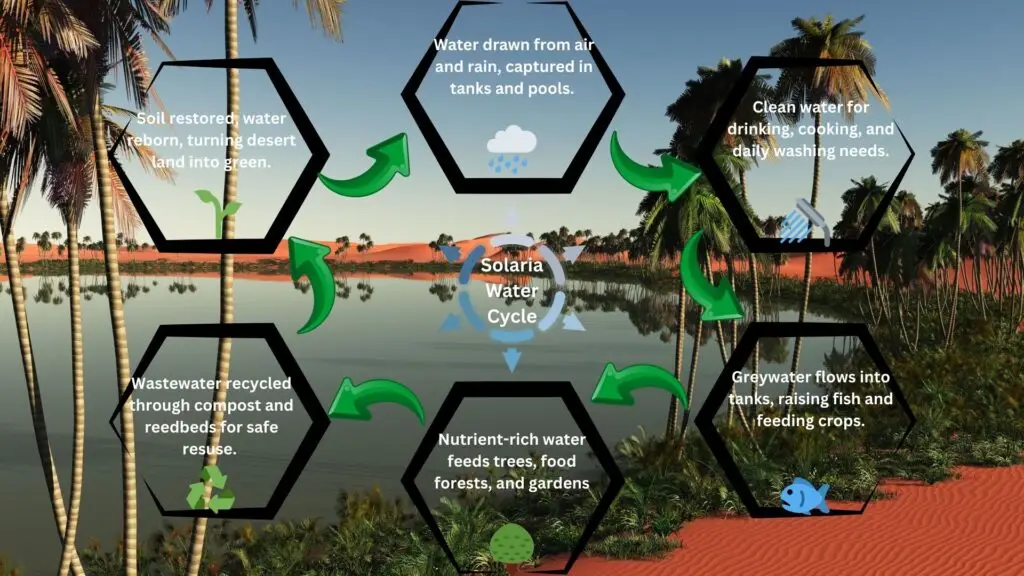
At Solaria, water is not taken, it is created, stored, and shared.
Water is life. In the desert, it is the difference between survival and flourishing. Solaria’s sustainable water systems cycle will transform scarcity into abundance, greening the land and nourishing the community.
Sustainable Water Systems & The Cycle
Harvest
- Air-to-water solar units: pulling clean drinking water directly from the atmposphere.
- Rain Capture: every drop collected and stored for future use.
- Floodwater redirection: diverting seasonal overflow into tanks and natural pools.
Store
- Natural Swimming hole: a living reservoir that cools the land and community.
- Water Tanks: reinforced storage for stability and resilience.
- Swales & Underground reserves: slowing water across the land so the earth can recharge.
Share
- Drip Irrigation at the roots: delivering water directly to roots with zero waste.
- Food forests & gardens: growing abundance where there was once only desert.
- Shade belts: cooling the air, feeding the soil, and protecting the community.
Return
- Greywater recycling: filtered and cycled back into the system.
- Blackwater treatment: reedbeds and composting for safe resuse.
- Organic enrichment: waste transformed into soil, water, and life reborn.
Harvest In Action
Store In Action
Share In Action
Return in Action
🌞 Harvest (AWG – Atmospheric Water Generation)
This video demonstrates how water can be drawn directly from the air. Atmospheric water generators show that clean, drinkable water can be harvested even in the driest climates.
🌊 Store (Geoff Lawton – Swales & Storage)
Geoff Lawton reveals how swales and natural reservoirs hold rainwater in the land. By creating sustainable water systems, arid ground becomes fertile and resilient.
🍃 Share (Drip Irrigation)
This demonstration shows why drip irrigation is the most efficient way to share water with plants. Every drop reaches the roots, feeding food forests and gardens without waste.
♻️ Return (Reed Bed Filtration)
Here we see how reed beds recycle greywater safely back into the cycle. Wastewater is filtered naturally, returning clean water to the land while enriching the soil.
🌿The First Layer: Local Desert Plants
Solaria’s sustainable water systems are not just designed for survival, but for transformation. By harvesting water from the air and sky, storing it carefully, and sharing it with precision, the community becomes more than self-sufficient, it becomes regenerative.
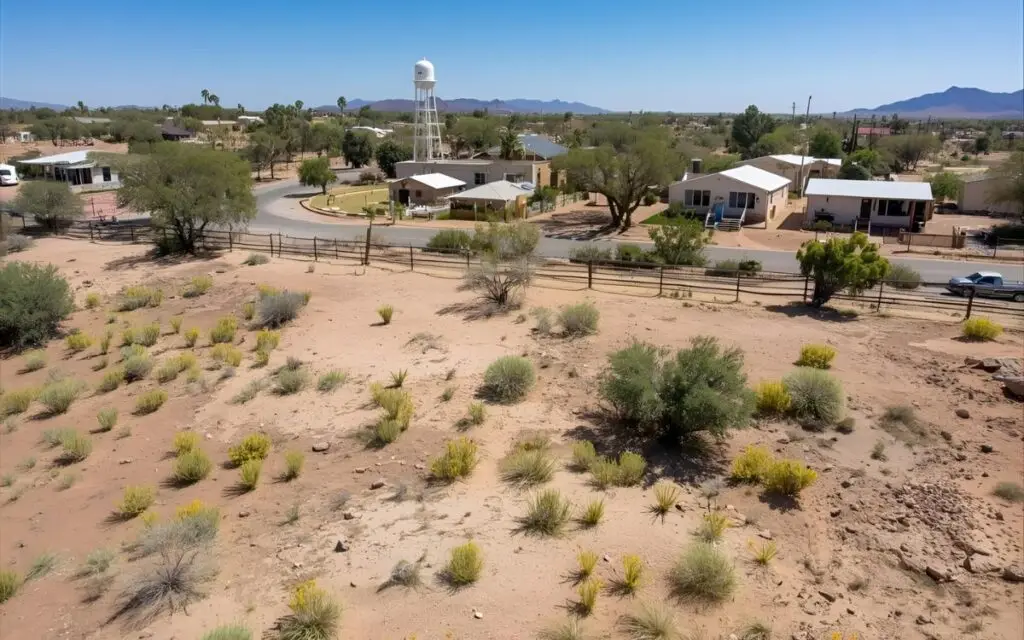
To begin, Solaria must root itself in the resilience of desert natives. Pioneer plants are chosen for their ability to thrive with little water, stabilize soil, and withstand heat.
Examples: Acacia, saltbush, spinifex grasses, mulga.
Purpose: Reduce erosion, soften the microclimate, provide initial organic matter.
Timeline: Planted immediately, visible establishment within 12–24 months.
🌳Shade & Soil: Creating a Microclimate
The foundation begins with native desert plants. Hardy species are planted first to anchor the soil, slow the wind, and survive with minimal input. These pioneer plants prepare the way for deeper fertility.
Once the pioneers have stabilized the land, the next stage is about creating shade. Small tree species and fast growers form shelter belts. With shade, soil moisture improves and temperatures ease.
Examples: Desert oaks, eucalyptus species, native figs.
Purpose: Provide canopy cover, leaf litter for soil building, and wind protection.
Timeline: First canopy effect within 3–5 years, enabling the introduction of more sensitive food species.
🍂 Expanding Outward: Rings of Green
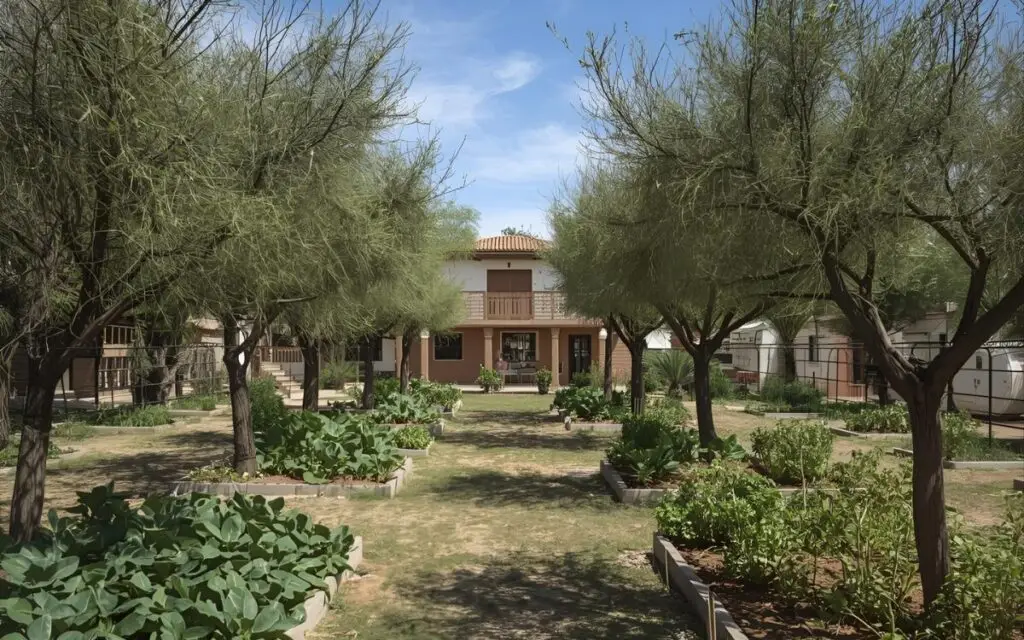
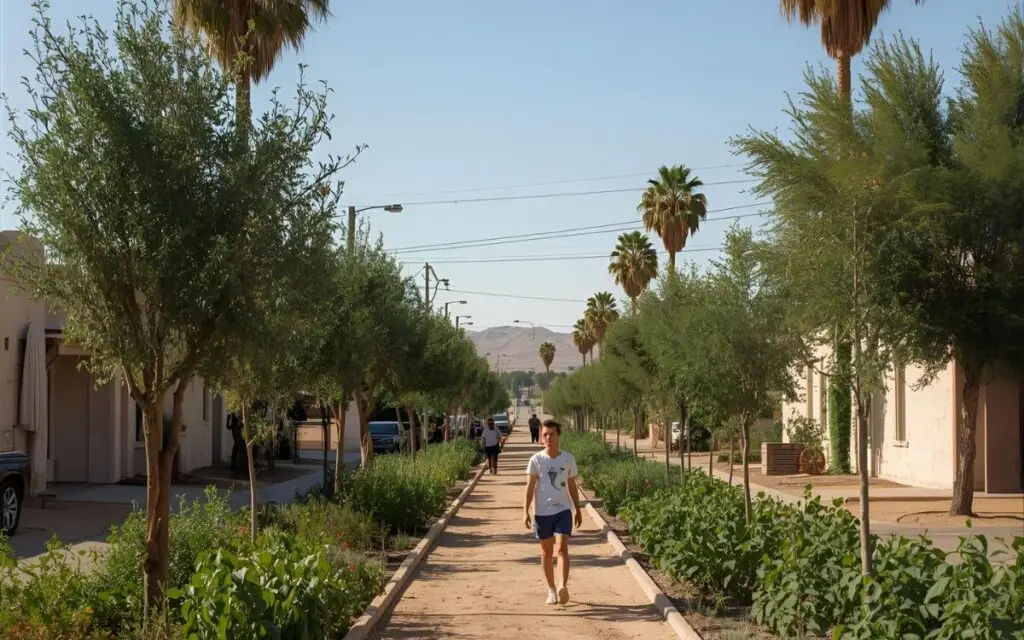
As shade takes hold, soil stabilises and temperatures ease. With each new pocket of shelter, opportunities for food and medicine expand. In shaded corners of the town, artificial beds and pots can grow native food plants and trees, connecting the water cycle directly to community nourishment.
With the first microclimates secure, planting pushes outward. Food-bearing species can be introduced both in artificial beds in town and in the surrounding belts. Each ring widens the green footprint of Solaria.
Examples: Bush tomatoes, quandong, wattleseed, supplemented by greenhouse-started natives transplanted into shaded beds.
Purpose: Direct food production, cultural connection to native bush foods, and biodiversity.
Timeline: Fruit and food harvest begins around years 5–7, full productive systems by year 10.
☀️Scaling with Technology
As soil health and shade improve, and more water is stored, additional solar-powered atmospheric water generators can be deployed further out, feeding the growth rings. What began as one small oasis becomes a spreading green corridor.
Purpose: Scale the transformation beyond the site, linking with the town and greening the desert.
Timeline: Each new AWG station expands planting by another 1–2 hectares within a season.