
Universal Basic Income in Australia
Australia is one of the wealthiest nations on earth. We have abundant natural resources, a highly educated workforce, and one of the highest standards of living in the world. And yet one in six Australian children still lives below the poverty line. Wages have stagnated for a decade while the cost of housing, energy and food has risen sharply. The systems we built to support people in need have become punitive, bureaucratic and dehumanising. A Universal Basic Income doesn’t fix everything. But it fixes the foundation and without a foundation, nothing else can be built.
How It Works
Universal Basic Income (UBI) is a flat, unconditional payment made to every adult citizen — no strings attached, no reporting requirements, and no work test. It’s designed to cover life’s basic needs, giving people the freedom to live, learn, care, or create without constant financial pressure.
Core Proposal
WeRise proposes a Universal Basic Income of $500 per week for every adult in Australia.
It would be:
- Universal – paid to every citizen or permanent resident over 18
- Unconditional – no reporting requirements, no compliance hoops
Tax-free – not treated as taxable income
Simple – paid automatically by the ATO, just like tax returns
Regular – weekly payments to match the real rhythm of bills and budgets
This payment would replace Centrelink benefits like JobSeeker and Youth Allowance, while preserving:
- The age pension
- The disability support pension
- Targeted support for carers, Indigenous communities, and people with chronic health needs
For families with children, WeRise proposes additional payments or integration with existing family benefits — to be addressed in a later policy page.
Why $500? Why weekly?
$500/week = $26,000/year — close to the age pension and above the current JobSeeker rate.
It exceeds the “healthy minimum” benchmark set by UNSW researchers (~$434/week)
Weekly payments reduce mental load, support food security, and align with real-life expenses
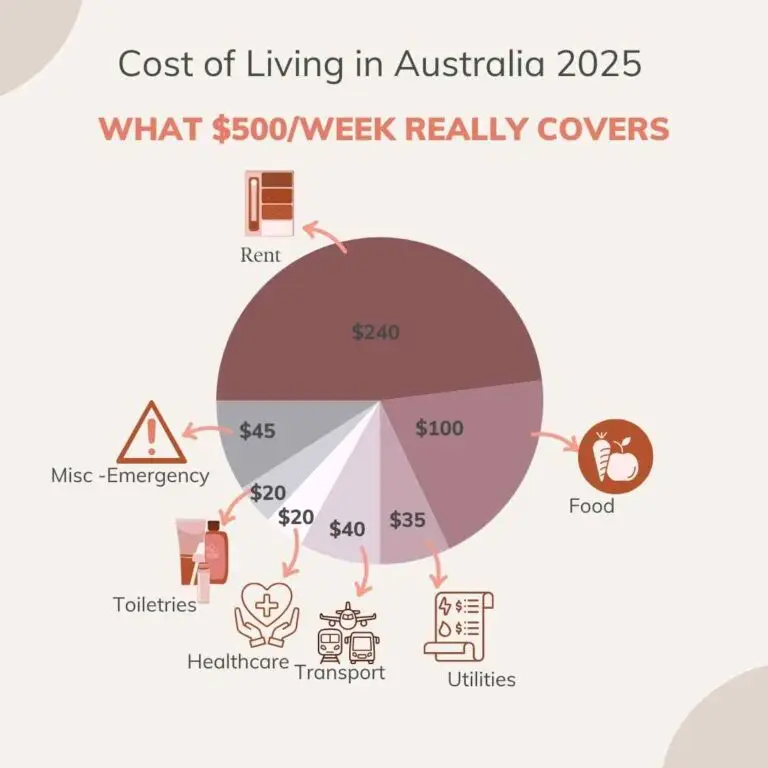
“This is what it costs to simply survive in Australia in 2025.”
$500 a week isn’t radical — it’s reality. Rent, food, transport, healthcare, utilities, and the barest buffer for emergencies. A Universal Basic Income simply reflects the true cost of dignity.
Evidence and Reports
The case for Universal Basic Income in Australia is not ideological. It is mathematical.
We already spend billions administering a welfare system that humiliates the people it’s supposed to help, while failing to lift them out of poverty. We already know from Finland, Stockton, Kenya and dozens of other trials that unconditional income does not make people lazy, it makes them healthier, more productive and more civically engaged.
The question is not whether Australia can afford a Universal Basic Income. Given what we currently spend on poverty, homelessness, mental health crises, domestic violence, and the downstream costs of inequality, the question is whether we can afford not to.
The floor exists. We just haven’t built it yet.
The strongest data and modeling on what UBI could cost, save, and unlock in Australia and beyond can be found below.
And if you would like to examine more of The WeRise policy ideas, check them out here.
Help Share This Information
If this page helped clarify Universal Basic Income in Australia, consider sharing it with someone who still has questions. The more people understand it, the closer we get to real change.
You can also contact us if you'd like to collaborate, republish, or feature this content elsewhere.