
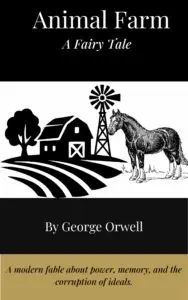
Animal Farm— A Fairy tale
Few books have earned the right to be called essential. Animal Farm is one of them. Some books warn you what is coming. Animal Farm shows you what has already happened — dressed in fur and feathers, speaking in slogans, and utterly convinced of its own righteousness. Orwell wrote it in 1944. Every generation since has recognised someone in it. Most have recognised several.
George Orwell
(1903-1950)
"Some animals are more equal than others."
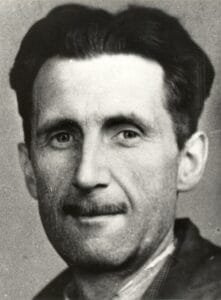
Eric Arthur Blair, known by his pen name George Orwell, was born in British India in 1903 and educated at Eton. Rather than follow a conventional path, he joined the Imperial Police in Burma, an experience that left him deeply opposed to imperialism and authority of all kinds.
He fought in the Spanish Civil War, nearly died from a fascist sniper’s bullet, and watched with horror as Stalinist forces turned on their own allies. That experience shaped everything he wrote afterwards.
Orwell spent much of his adult life in poverty, writing journalism, essays, and novels that combined fierce political clarity with extraordinary prose precision. He died of tuberculosis in 1950, aged 46.
He remains one of the most quoted writers in the English language. Almost everything he warned about is still happening.
When the animals of Manor Farm overthrow their cruel human master, they do so with a dream — that all animals are equal, that the fruits of their labour will finally be their own, that the farm will be run for everyone rather than for one.
It doesn’t work out that way.
What follows is one of the most precise and devastating accounts of how revolutions fail ever written. The pigs, led by the cunning Napoleon, gradually assume control. The rules are rewritten. The history is revised. The animals who worked hardest find themselves with less than before. And the language of liberation is quietly repurposed to justify everything it once opposed.
Orwell wrote Animal Farm as a direct allegory for Stalinist Russia — but he was too honest a writer to let it stay that specific. The pattern he describes belongs to no single revolution and no single era. It belongs to all of them.
Published 1945. Author: George Orwell. Public domain in Australia.
Why It Matters:
Animal Farm is ninety pages long. You can read it in an afternoon. And once you have, you will find yourself returning to it — not for comfort, but for clarity. In a world full of noise and competing narratives, Animal Farm cuts through everything with the precision of a blade and the patience of a fable.
What Orwell understood — and what makes this book permanently relevant — is that the corruption of ideals rarely announces itself. It arrives gradually, with reasonable explanations, through small compromises that each seem defensible in isolation. By the time the pigs are walking on two legs and carrying whips, the other animals can barely remember a time when things were different. That is precisely the point.
In 2026 the mechanisms Orwell describes are not historical curiosities. Movements that begin with genuine grievance and legitimate goals still produce hierarchies. Language that was forged in liberation still gets repurposed by those who benefit from the status quo. The slogans change. The structure doesn’t.
Four legs good. Two legs better. Read this and you’ll never hear a slogan the same way again.
That is precisely why it belongs here.
A note on publishing
First published 1945 by Secker and Warburg, London. Rejected by four publishers before finding print. Victor Gollancz, Jonathan Cape and T.S. Eliot at Faber all turned it down. It went on to sell millions.
This text is sourced from Project Gutenberg — the world’s largest collection of free public domain books.