

Foundations of Dignity
The floor beneath everything else.
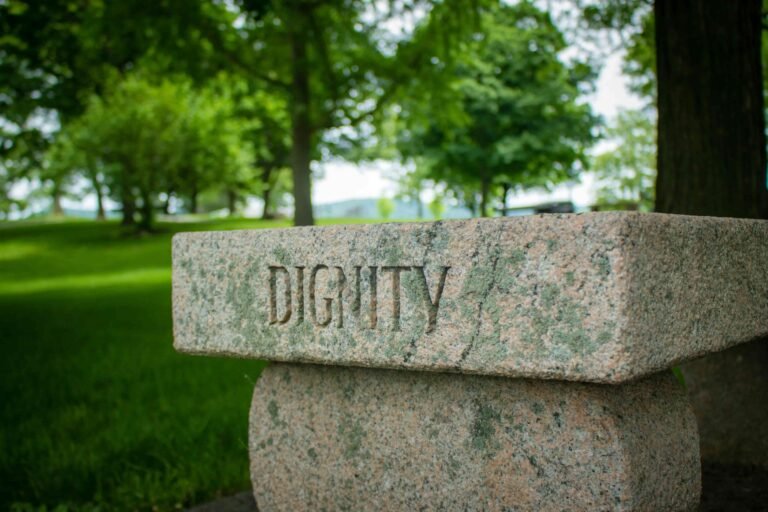
Before we talk about what Australia could build, we need to talk about the Foundations of Dignity every Australian deserves to stand on.
Right now, millions of Australians are standing on nothing. A missed paycheck from homelessness. One diagnosis from financial ruin. One bad year from a decade of recovery. A childhood defined by what their parents couldn’t afford rather than what they were capable of becoming.
That is not a foundation. That is a trap.
And here is the thing nobody tells you about traps: they are expensive. Not just for the people caught in them. For all of us.
What 'Foundations of Dignity' Actually Means
Dignity is not a feeling. It is a condition. And the Foundations of Dignity are a platform from which we help each other rise to the future.
It is the condition of having enough: enough security to plan, enough stability to grow, enough safety to take risks. It is the condition of being treated as a person rather than a problem. Of having your contribution recognised whether it shows up in a payslip or not.
A parent raising children. A person caring for an ageing parent. A young person retraining for a changed economy. An elder who built this country and deserves to finish their life with grace. None of these people are burdens. All of them are doing work that matters. And all of them deserve a system that says so.
The Cost We Don't Talk About
Australia spends billions every year on the consequences of insecurity:
$159,510
The cost to incarcerate 1 person for 1 year
When it costs more to imprison someone for a year than to send them to university, we have to ask what we are actually trying to achieve. Australia’s incarceration rate has grown by 30% in the last decade, while crime rates in most categories have fallen. We are spending more, achieving less, and calling it justice. The Justice with Mercy policy asks a simple question: what if we invested in people before they reached crisis, rather than after?
$70 Billion
The annual direct cost of mental ill-health in Australia — healthcare, lost productivty and informal care.
One in five Australians experiences mental illness in any given year. Most won’t get timely help, not because help doesn’t exist, but because the system wasn’t built to find them before they hit crisis. We spend billions managing breakdown. We spend a fraction of that on prevention. The Right to Heal asks what changes when we flip that equation, and build a system that catches people before they fall.
$7.7 Billion
The cost of 788,000 potentially preventable hospital admissions in 2023-24.
788,000 Australians hospitalised last year for conditions that didn’t need to get that bad. Diabetes. Heart failure. Respiratory disease. Conditions managed in the community, with the right support at the right time, rarely become hospital emergencies. But we have consistently chosen to fund the emergency rather than prevent it. Healthcare as a Human Right is about building a system that treats people before a crisis, not just after.
$13 Billion
The cost of homelessness to the Australian economy annually. Not what we spend on housing them, but what we pay for not housing them.
We spend $13 billion a year on the consequences of homelessness, in health, justice, lost productivity, and emergency services. We spend a fraction of that actually housing people. Countries that have adopted Housing First approaches — Finland, Canada, New Zealand — have dramatically reduced homelessness by treating shelter as the starting point, not the reward for stability. Security for Every Soul and A Roof is a Right address both sides of this equation.
1 in 6
The number of children in Australia living below the poverty line. Not because their parents don’t work, but because the system no longer works for them.
One in six Australian children growing up below the poverty line will carry that disadvantage across their entire lifetime — in health outcomes, in educational attainment, in economic opportunity. The cost compounds with every generation we choose not to act. Security for Every Soul — Universal Basic Income — addresses this directly. A guaranteed income floor doesn’t just help parents. It changes what’s possible for their children.
We are not ncessarily proposing to spend more. We are proposing to spend differently. Earlier. Smarter. On causes rather than consequences.
Prevention is not idealism. It is arithmetic.
The Policies
Universal Basic Income (UBI)
3,000,000 Australians
Universal Healthcare
600,000 Australians
Early Childhood
$13 returned for every $1 Spent
Aged Care
56% of Aged Care Recipients
Workers' Rights
Billions
The Argument for Foundations of Dignity
These seven policies that make up the Foundations of Dignity share a single logic: it is cheaper, smarter, and more humane to invest in people before they reach crisis than to manage the damage after.
This is not radical. Every successful society on Earth that outperforms Australia on wellbeing, life expectancy, social mobility, and civic trust has figured this out. Finland. Denmark. New Zealand. Iceland. They did not get there by spending less on people. They got there by spending earlier, spending smarter, and treating dignity as infrastructure rather than charity.
We can do better than we are doing. Not because we are weak or inept or cruel. But because we haven’t yet made the decision to try.
This is us trying.
These seven policies are the foundation. The other nineteen build on top of them. Because before we can rise together, we all need a solid foundation of dignity to stand on.
We aren’t asking you to take our word for it. The evidence behind Foundations of Dignity comes from the Australian Council of Social Service (ACOSS), the Productivity Commission, the Australian Institute of Health and Welfare, and the World Health Organization.