
The Wonderful Wizard Of Oz
The Wonderful Wizard of Oz
Beyond the grey prairie, past the whirling dark, there is a country where the roads are paved with yellow brick and the city gleams emerald against the sky. You have been waiting to go there your whole life. You just didn’t know it yet.
L. Frank Baum
(1856-1919)
A children's story. An American myth. A world you can never forget.
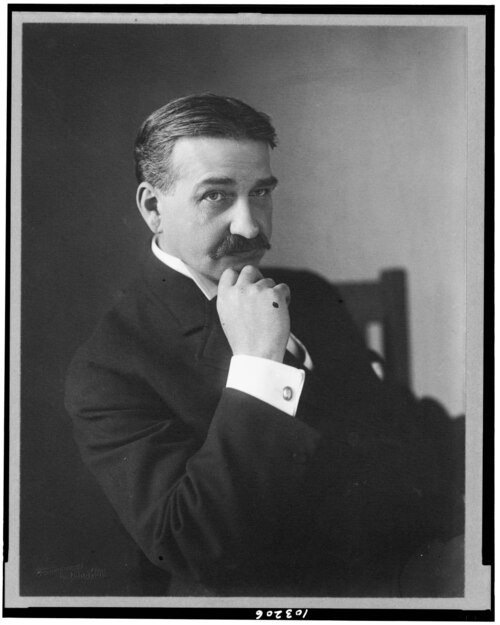
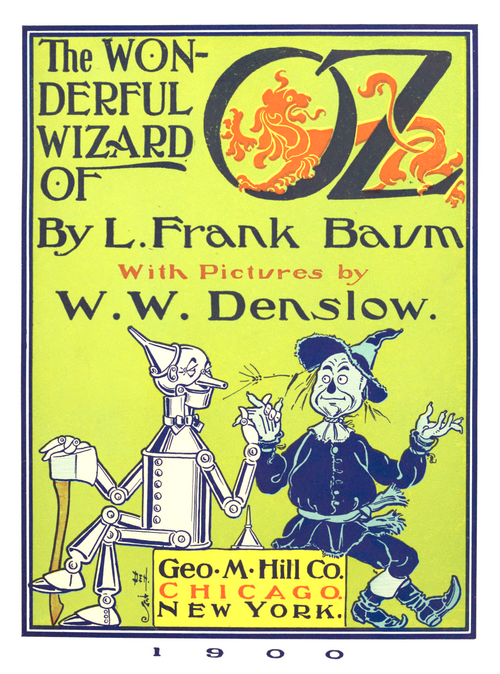
L. Frank Baum spent most of his life failing at things before he wrote the book that would outlast everything.
He hated his first name, Lyman, and insisted on being called Frank. Before achieving literary immortality at forty-four, he had been a reporter, a printer, an actor, a poultry breeder, an editor, a theatre manager, a playwright, a frontier storekeeper, and a travelling salesman.
He married Maud Gage, whose mother was one of America’s most prominent suffragists, and followed her west to the Dakota Territory where drought killed his store and then his newspaper.
He moved to Chicago, took up selling glassware, and started telling bedtime stories to his four sons about a place he couldn’t quite name.
When he finally finished the manuscript, he framed the pencil stub he’d written it with, certain he had produced something great. He was right, though he never quite escaped debt again.
He died in 1919, still writing, still dreaming up new corners of Oz on demand.
Publishers initially rejected The Wonderful Wizard of Oz because of the expense of reproducing the colour plates.
Baum and illustrator W. W. Denslow insisted on them anyway and eventually split the printing costs with George M. Hill of Chicago.
The first edition of 10,000 copies sold out before distribution even began. By October 1900, a second edition of 15,000 was nearly depleted.
The Wonderful Wizard of Oz became the bestselling children’s book in America for two years running. A Grand Rapids newspaper wrote that Denslow’s illustrations were quite as much of the story as the writing itself.
The two men fell out bitterly over royalties from the 1902 Broadway musical. Denslow used his share to purchase an island off Bermuda and declare himself King.
He never illustrated another Oz book. Baum wrote thirteen more without him.
The Wonderful Wizard of Oz
Why It Matters:
In 1900 a lavishly illustrated children's book was a luxury object: something you saved for, something you kept, something passed between siblings and generations.
Denslow’s boldly imaginative illustrations and page design created a sea change in the aesthetics of children’s publishing, proving that visual storytelling and literary quality could occupy the same pages.
But the deeper revolution was Baum’s refusal to moralise. Every fairy tale before it: Grimm, Andersen, all of them, hid a lesson in the darkness. Baum threw the darkness out and trusted children to find their own meaning. What he couldn’t have known was that the meaning they found in The Wonderful Wizard of Oz and the many books that would follow would keep regenerating across every medium for over a century.
From Judy Garland to Stephen Sondheim, from Gregory Maguire’s Wicked to a dozen film adaptations, Oz has become one of the few truly mythological spaces America has produced, a place that means something different to every generation that enters it. Perhaps that’s the real magic. Not the yellow brick road, not the emerald city, not the witches or the wizards, not even what’s over the rainbow. Just the quiet, persistent discovery that there’s no place like home.
This text is sourced from Project Gutenberg — the world’s largest collection of free public domain books.