
The Picture of Dorian Gray
Download Free PDF
Download Free EPUB
Download Free for Kindle
The Picture of Dorian Gray, Oscar Wilde’s only novel, arrived in 1890 to a storm of outrage, denounced as poisonous, immoral, and unfit to print. More than a century later, the scandal has faded and the brilliance remains. Its story of a beautiful young man who trades his soul to stay forever young, while a hidden portrait bears the disfigurement of his every sin, is Wilde at his most quotable and most unsettling: a glittering social comedy wrapped around a genuine horror about vanity, influence, and the price of a life lived purely for pleasure.
Oscar Wilde
(1854-1900)
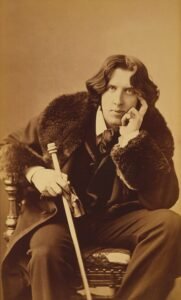
Oscar Wilde (1854–1900) was an Irish poet, playwright, and the most celebrated wit of his age. Born in Dublin and educated at Trinity College and then Oxford, he became the leading voice of the Aesthetic movement, the conviction that art exists for its own sake, answerable to beauty rather than to morality. By the early 1890s he was the most talked-about man in London, his comedies Lady Windermere’s Fan and The Importance of Being Earnest filling theatres while his epigrams filled drawing rooms.
The Picture of Dorian Gray was his only novel. Five years after its publication, passages from it were read aloud in court as evidence against him during the trials that led to his imprisonment for “gross indecency.” He emerged two years later, broken in health and fortune, wrote his final masterpiece The Ballad of Reading Gaol, and died in exile in Paris in 1900, aged forty-six. The wit outlived the man: Wilde remains one of the most quoted writers in the English language.
A Warning from the Past. A Mirror of the Present.
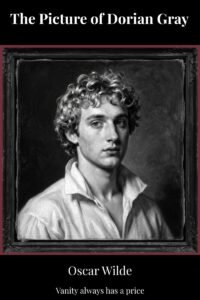
When the artist Basil Hallward paints a portrait of the beautiful young Dorian Gray, his subject makes an idle, fervent wish, that the painting might age in his place, so he could stay forever young. The wish is granted. As Dorian sinks into a life of pleasure and cruelty under the influence of the cynical Lord Henry Wotton, his face remains flawless, while the portrait, locked away, grows monstrous with the record of his sins.
First published in Lippincott’s Monthly Magazine in 1890, the novel provoked such outrage that Wilde expanded and revised it for the 1891 book edition, adding several new chapters and a now-famous preface defending art against its critics. It is that complete 1891 text that this edition presents. Equal parts Gothic horror, philosophical fable, and sparkling social comedy, it remains the definitive fictional study of a soul sold for the sake of appearances.
Why It Matters:
Dorian Gray gave the world a myth it has never stopped using. The image of a hidden portrait absorbing the damage of a life, while its owner stays untouched on the surface, has become shorthand for hypocrisy, denial, and the gap between the face we show and the self we conceal. In an age of curated images and public personas, the story reads less like a Victorian fantasy than a warning written ahead of its time.
But its power isn’t only thematic. Wilde used the novel to stage the central argument of his life, whether beauty answers to morality at all, and refused to settle it cheaply. The result is a book that seduces and indicts in the same breath: as charming as its villain, and as unflinching as its ending. More than a century on, it remains essential reading on vanity, influence, and the cost of treating one’s own life as a work of art.
Download Free PDF
Download Free EPUB
Download Free for Kindle
This text is sourced from Project Gutenberg — the world’s largest collection of free public domain books.