

Country & Culture
Changing the way we see ourselves & others
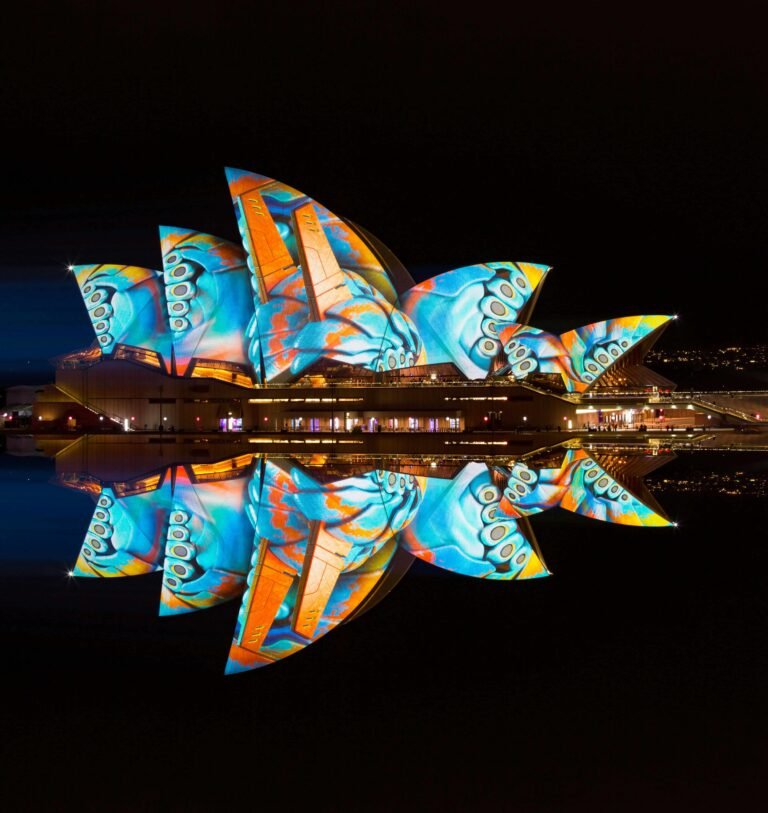
Who are we? It sounds like a simple question. It isn’t. Country and Culture attempts to explore this question.
Australia is one of the most culturally diverse nations on Earth, built by First Nations peoples across 65,000 years, shaped by waves of migration from every corner of the world, and enriched by the languages, traditions, stories, and knowledge that arrived with every person who called this place home.
And yet we have spent much of our short post-colonial history arguing about who belongs here, who counts as Australian, and whose story deserves to be told.
Country & Culture is our answer to that argument. Not a defensive one. Not an angry one. A generous one. Because the question of who we are is only worth asking if we’re genuinely prepared to hear the full answer, the ancient and the new, the uncomfortable and the extraordinary, the story we inherited and the one we’re still writing.
This pillar is about seeing ourselves clearly. And seeing each other honestly. Because you cannot build a fair society on a foundation of selective memory and managed identity
What 'Country and Culture' Actually Mean
The Cost We Don't Talk About
When a society doesn't know its own history, misunderstands its neighbours, and silences its storytellers, it pays. In division, in distrust, in the slow erosion of everything that makes a place worth belonging to.
65,000 Years
The oldest continuous living culture on Earth. Right here. On this land. Still teaching, still singing, still caring for Country. It’s not history, it’s now
30%
The proportion of Australia’s population born overseas. We are already one of the most successfully diverse nations on Earth.
$111 Billion
The contribution of Australia’s art and culture to GDP annually. The stories we tell about ourselves, in film, music, art, literature, and performance, are an important part of how a society grows.
$38 Billion
The estimated annual cost of climate change impacts to the Australian economy by 2030 — in damage to infrastructure, agriculture, health, and productivity.
Source: Deloitte Access Economics 2021
250
The number of languages spoken in Australia prior to colonisation. Only 123 remain. One in 6 first nations people now learn their native language to ensure their survival.
We are not proposing to spend more. We are proposing to spend differently. Earlier. Smarter. On causes rather than consequences.
Prevention is not idealism. It is arithmetic.
The Policies
Immigration & Refugees
43 Million refugees worldwide in 2023
Multiculturalism & Discrimination
Arts & Culture
The Argument We Are Making
These seven policies that make up the Foundations of Dignity share a single logic: it is cheaper, smarter, and more humane to invest in people before they reach crisis than to manage the damage after.
This is not radical. Every successful society on Earth that outperforms Australia on wellbeing, life expectancy, social mobility, and civic trust has figured this out. Finland. Denmark. New Zealand. Iceland. They did not get there by spending less on people. They got there by spending earlier, spending smarter, and treating dignity as infrastructure rather than charity.
We can do better than we are doing. Not because we are weak or inept or cruel. But because we haven’t yet made the decision to try.
This is us trying.
These seven policies are the foundation. The other nineteen build on top of them. Because before we can rise together, we all need a solid foundation of dignity to stand on.
We aren’t asking you to take our word for it. The evidence behind Foundations of Dignity comes from the Australian Council of Social Service (ACOSS), the Productivity Commission, the Australian Institute of Health and Welfare, and the World Health Organization.