

Where We Live
Because where you live shouldn't determine how you live.
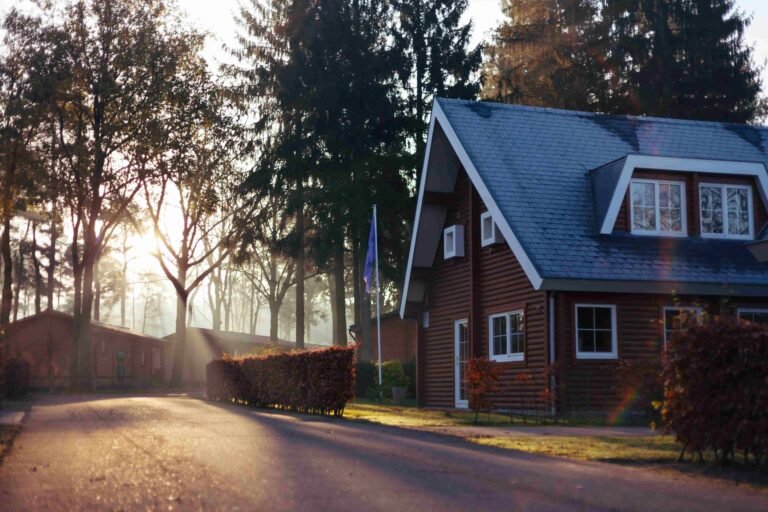
Where We Live is the most personal pillar in this platform. Not because the others don’t matter, they do, deeply, but because housing, transport, and connectivity are the physical conditions of daily life. They are what you encounter before you encounter anything else.
Before you get to healthcare or education or economic opportunity, you need somewhere to sleep, a way to get there, and a connection to the world beyond your front door. When those three things work, everything else becomes possible. When they don’t, everything else becomes harder.
In Australia right now, for too many people, they don’t work. And that is a policy failure, not an inevitability.
What 'Where We Live' Actually Means
It means a home is a place to live, not an investment vehicle, not a speculative asset, not a number on a spreadsheet in a property portfolio. A place where children do their homework, families grieve and celebrate, people recover and rest. The financialisation of housing has made shelter into a commodity and left millions of Australians, renters, first home buyers, essential workers, and young people, locked out of something fundamental.
It means transport is a public good, not a privilege for those who can afford a car or happen to live near a train line. The freedom to move through your own country, to access work and education and family and culture, should not depend on your postcode or your income. Regional Australians have watched rail lines close, bus routes disappear, and the assumption quietly calcify that if you don’t own a car you don’t really need to go anywhere.
It means connectivity is infrastructure, as essential as roads and power lines. A student in outback Queensland trying to submit an assignment, a farmer accessing precision agriculture data, a sole trader competing with city-based businesses, all of them are operating at a structural disadvantage because a decision was made to build a cheaper, slower, patchwork digital network rather than the one we were promised.
Where we live shapes how we live. We want to change that.
The Cost We Don't Talk About
When the basics aren’t basic enough, everything downstream gets harder and more expensive.
122,494 — Australian homesless on any gven night. In one of the wealthiest countries on Earth.
Source: ABS Census Data 2021
That number represents people sleeping rough, in temporary shelters, in cars, in overcrowded dwellings with no security of tenure. But homelessness is the visible tip. Below it, millions more live in housing stress, spending more than 30% of their income on rent or mortgage, one missed payment from crisis.
The housing affordability emergency did not happen by accident. It was built through negative gearing policies that incentivise investment over occupancy, through decades of underinvestment in public housing, through planning systems that protect existing property values over new supply. We chose this. We can choose differently.
0.4% — The proportion of rental properties affordable to someone on JobSeeker.
Source: Anglicare 2023 Rental Affordability Snapshot
Not 4%. Not 14%. 0.4%. Essentially zero. The rental market in Australia has failed the people who need it most so completely that the failure is now mathematical. A person receiving JobSeeker, the government’s own minimum safety net payment, cannot find affordable rental accommodation in virtually any part of the country.
This is not a market functioning badly. This is a market that was never designed to house everyone, only those who could pay enough. The question is whether we accept that as inevitable or recognise it as a choice that can be unmade.
$110 Billion — The estimated cost of the East Coast high-speed rail corridor. Roughly what Australia spends on fossil fuel subsidies every decade.
Source: Infrastructure Australia
High-speed rail connecting Brisbane, Sydney, Canberra, and Melbourne has been studied, reviewed, recommended, and deferred for forty years. In that time, the corridor has become more congested, more expensive to build, and more necessary. The argument that we can’t afford it has always been selective; we find money for things we decide matter.
Regional transport has fared even worse. Bus routes cut. Rail lines closed. Communities were effectively told that their mobility is not a public priority. The people who made those decisions rarely lived in the communities that bore the consequences.
220,000 — Australian households with no internet access at home. Disproportionately in regional, remote, and low-income communities.
Source: ABS 2021
The internet is no longer optional infrastructure. It is how you access government services, healthcare, education, banking, and employment. Telling 220,000 households they don’t have reliable home internet in 2024 is telling them they are structurally excluded from full participation in modern life.
The NBN was supposed to end this. Instead of the fibre-to-the-premises network originally promised, we built a multi-technology compromise designed to protect existing infrastructure investments. The result is a patchwork that still leaves significant parts of the country, disproportionately the parts that could most benefit, underserved.
35% Increase in Australian rents between 2020 and 2024 — the fastest rate of rental growth in recorded history.
Source: CoreLogic 2024
In four years, a third added to the cost of renting. In a country where wages grew by less than half that amount in the same period. The rental crisis is not a supply problem alone, it is a policy problem, a taxation problem, and a priority problem. We have consistently chosen to protect the interests of property investors over the interests of the people who need somewhere to live.
Every percentage point of rent increase above wage growth is a transfer of wealth from renters to landlords. Four years of that transfer has left a generation locked out of housing security they may never recover.
We are not proposing to spend more. We are proposing to spend differently. Earlier. Smarter. On causes rather than consequences.
Prevention is not idealism. It is arithmetic.
Housing Policy
122,000 Australians
Transport
High Speed Rail Brisbane to Melbourne
Internet & Communication
Broadband and Mobile
The Argument We Are Making About Where We Live
Where We Live is about the physical conditions that make everything else possible. You cannot build a fair society if people don’t have somewhere safe to sleep. You cannot build a connected economy if regions are cut off from transport and communications. You cannot ask people to participate fully in civic life if the infrastructure of participation isn’t there.
The policies in this pillar are not luxuries. They are the conditions for everything else on this platform to work. Housing first, because without it, nothing else holds. Transport next because mobility is freedom. Connectivity last, because in the 21st century, being offline is being left behind.
None of this requires inventing something new. Housing First programs work wherever they’re tried. High-speed rail exists on every comparable continent. Fibre broadband is standard in dozens of countries smaller and poorer than Australia.
We don’t need to invent a better way. We just need to choose it.
These seven policies are the foundation. The other nineteen build on top of them. Because before we can rise together, we all need a solid foundation of dignity to stand on.
We aren’t asking you to take our word for it. The evidence behind the policies found in “Where We Live’ can be found at the Australian Bureau of Statistics, Anglicare Australia, Infrastructure Australia,
, and the Australian Communications and Media Authority, ad read more WeRise Policies here