
Political and Social Thought
The most consequential ideas in human history have not come from kings or armies. They have come from thinkers who looked at the world as it was, imagined it as it could be, and wrote down the difference. This wing of the Librarium collects the texts that shaped how power is organised, challenged, distributed, and abused from the foundational works of political philosophy to the radical pamphlets that changed everything. Read carefully. These ideas are not finished.
Dystopias and Dangerous Truths
The most honest portraits of power are often painted as fiction. Orwell, Huxley, Zamyatin and their descendants did not predict the future, they described the present with the serial numbers filed off. This shelf collects the novels, essays and warnings that governments have banned, burned and suppressed, and the ones they probably should have. If a book makes the powerful uncomfortable, it belongs here.

Animal Farm
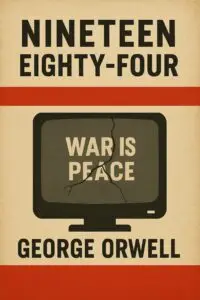
Nineteen Eighty-Four
Cooperative Visions
Not every alternative to the existing order looks like revolution. Some look like a bakery owned by its workers, a community that decided to do things differently, or a philosopher who asked what society might look like if we started from cooperation rather than competition. This shelf collects the thinkers and dreamers who believed another way was not only possible but practical and in many cases proved it.

The Conquest of Bread
The Architecture of Power
Power does not announce itself. It builds institutions, writes constitutions, establishes procedures, and calls itself inevitable. This shelf examines how power is constructed, the political philosophers who designed the systems we live inside, the theorists who exposed how those systems actually work, and the writers who asked whether they could be built differently. From Hobbes to Gramsci, from Locke to Foucault.

Voices from the Margins
The history of political thought is largely a history of who got to do the thinking, and who didn’t. This shelf corrects the record. The suffragists, the abolitionists, the colonised writing back to the colonisers, the workers who organised before organising was legal, the communities whose political philosophies were dismissed, suppressed or simply never translated. The margins have always contained the most interesting arguments.
The Social Contract & It's Discontents
Somewhere between Rousseau’s noble savage and Hobbes’ war of all against all lies the question that has driven political philosophy for four centuries: what do we owe each other, and what do we owe the state? This shelf collects the foundational texts of social contract theory and the writers who found it wanting, insufficient, or a convenient fiction designed to make the existing order seem inevitable.
How Movements Move
Ideas alone have never changed anything. At some point someone has to organise, march, strike, sit down, stand up, or print something dangerous and hand it out on a street corner. This shelf examines the mechanics of social change — how movements are built, why they succeed or fail, what they do to the people inside them, and what the world looks like after they win or lose.
The Economy of Everything
Politics and economics have never been separate disciplines, whatever the textbooks say. Every budget is a statement of values. Every trade agreement is a political choice. Every theory of how wealth is created contains within it a theory of who deserves it. This shelf collects the economists, critics, and theorists who understood that, from Adam Smith to Marx to Keynes to the writers who came after all of them and found them all wanting in different ways.
Truth, Propaganda & the Public Mind
Democracy requires an informed public. This has always been the problem. This shelf examines how information is shaped, controlled, manufactured, and weaponised from Bernays inventing public relations to Lippmann worrying about the phantom public to the modern theorists mapping the architecture of disinformation. Understanding how the public mind is manipulated is the first step toward not being manipulated by it.
Justice & Its Failures
Every legal system is a theory of justice made concrete and every legal system fails, repeatedly and in predictable ways. This shelf collects the philosophers who asked what justice actually means, the lawyers and activists who documented where the system fell short, the reformers who tried to fix it, and the writers who asked whether it could ever be fixed at all. Essential reading for anyone who has ever stood inside a courtroom, or been unable to afford to.
Nations, Borders & Belonging
The nation state is roughly 400 years old. The idea that it is the natural and inevitable way to organise humanity is younger than that, and increasingly difficult to defend. This shelf examines how nations are constructed, how borders are drawn and enforced, what belonging means to those who have it and those who don’t, and what political imagination might look like in a world where the old containers no longer fit what needs to be contained.
Political and Social Thought
The texts collected in the political and social thought wing of the Librarium do not agree with each other. That is the point. Political and social thought has never been a settled discipline; it is an argument that has been running for three thousand years, and the best contribution any library can make is to put the voices in the same room and let the reader decide. Browse the shelves above, or return to the Librarium to explore the other wings. For deeper reading on the ideas collected here, the Stanford Encyclopedia of Philosophy remains the finest free academic reference on the web.