Education, Learning & The Mind
The oldest question in civilisation is not political or scientific; it is pedagogical. How do we pass on what we know? How do we teach people to think rather than simply to remember? This wing collects the works that have shaped how humanity understands the mind, the self, and the art of learning itself. From Plato’s dialogues to the latest cognitive science, from philosophy of mind to the practical mechanics of education, this is where the examined life begins, through education, learning & the mind.
The Examined Life - Philosophy of Mind & Self
Socrates claimed he knew nothing. It was the most productive intellectual position in history. This shelf collects the works that ask what it means to think, to know, to be conscious, and to live deliberately, from the ancient Greek tradition through to the contemporary philosophers still wrestling with the hardest questions a mind can ask about itself.
How We Learn - Education and Pedagogy
Every theory of education, learning & the mind is a theory of human nature in disguise. What we believe about how people learn reveals what we believe people are capable of becoming. This shelf collects the foundational works of educational theory and practice: Dewey, Freire, Montessori, and the thinkers who came after them, alongside the practical and philosophical arguments about what school is actually for.
The Rational Animal - Logic, Reason & Critical Thought
Reason is not a natural state. It is a discipline, one that has to be learned, practiced, and defended against the very human tendency to believe what we want to believe. This shelf collects the works that teach the mechanics of clear thinking: logic, argumentation, epistemology, and the study of how and why human reasoning so reliably goes wrong.
Maps of Consciousness - Psychology & the Inner World
Freud mapped a continent that turned out to be partly fictional. Jung drew stranger maps still. But the project, understanding what happens inside a human mind, remains the most intimate and unfinished in all of science. This shelf collects the foundational works of psychology and the study of consciousness, from the early pioneers to the contemporary researchers still arguing about what the mind actually is.
Language & the Limits of the World
Wittgenstein said the limits of my language are the limits of my world. This shelf takes that claim seriously. It collects the works of linguistics, semiotics, philosophy of language, and the study of how the words we have, or don’t have, shape what we are able to think, feel, and imagine.
Ethics & the Art of Living
How should one live? The question has generated more argument than any other in human history and produced no consensus whatsoever, which is either a failure of philosophy or its greatest achievement. This shelf collects the major works of ethical theory, from Aristotle’s virtue ethics to Kant’s categorical imperative to the utilitarian tradition to the contemporary philosophers still adding new answers to the oldest question.
The Examined Faith - Religion, Belief & Doubt
Belief is the most universal human experience and the least examined. This shelf collects the works that take religion seriously as a subject of inquiry, the theology, the philosophy of religion, the comparative study of belief systems, and the writers who have wrestled honestly with faith, doubt, and the question of what it means to live in a universe that may or may not care that you exist.
Minds & Machines - Artificial Intelligence & Cognition
The question of whether a machine can think is really a question about what thinking is. This shelf collects the foundational works of artificial intelligence, cognitive science, and the philosophy of mind that has grown up alongside them, from Turing’s original paper to the contemporary debates about consciousness, intelligence, and what we are building when we build machines that learn.
The Examined Self - Memoir, Autobiography & Personal Essay
Every legal system is a theory of justice made concrete and every legal system fails, repeatedly and in predictable ways. This shelf collects the philosophers who asked what justice actually means, the lawyers and activists who documented where the system fell short, the reformers who tried to fix it, and the writers who asked whether it could ever be fixed at all. Essential reading for anyone who has ever stood inside a courtroom, or been unable to afford to.
Education, Learning & The Mind
The texts collected in the Education, Learning & the Mind wing of the Librarium do not offer a single answer to how human beings think, learn, or become who they are. They offer something better, a chorus of competing frameworks, each illuminating something the others miss. The neuroscientist and the philosopher disagree. The psychologist and the educator disagree. The mystic and the rationalist disagree profoundly. That tension is not a problem to be resolved. It is the most honest thing we can say about the human mind: that it remains, after all this time, genuinely mysterious. Browse the shelves above, or return to the Librarium to explore the other wings. For those wishing to go deeper, the Stanford Encyclopedia of Philosophy offers rigorous free access to the philosophical traditions represented here, and the Learning Scientists provide excellent free summaries of the evidence base behind education, learning & the mind.

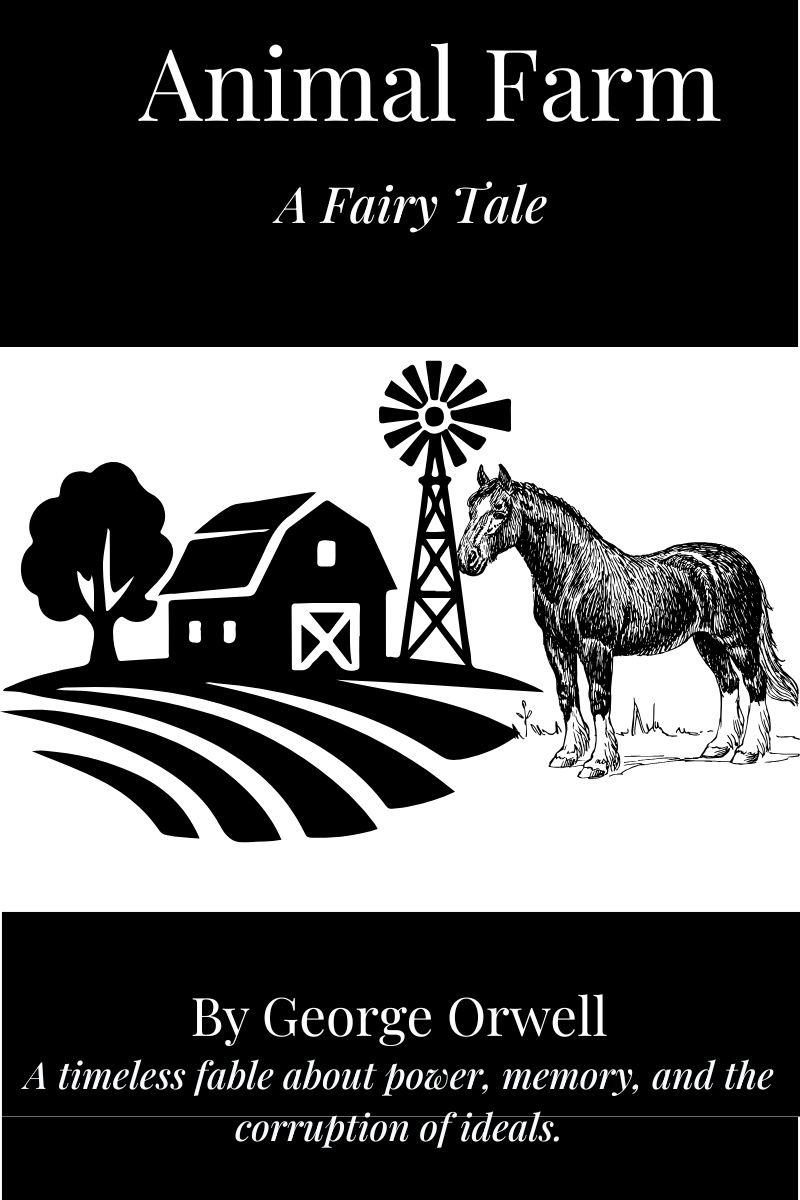
Animal Farm